Exterior Outlet With No Box Behind It - Here's What We Found
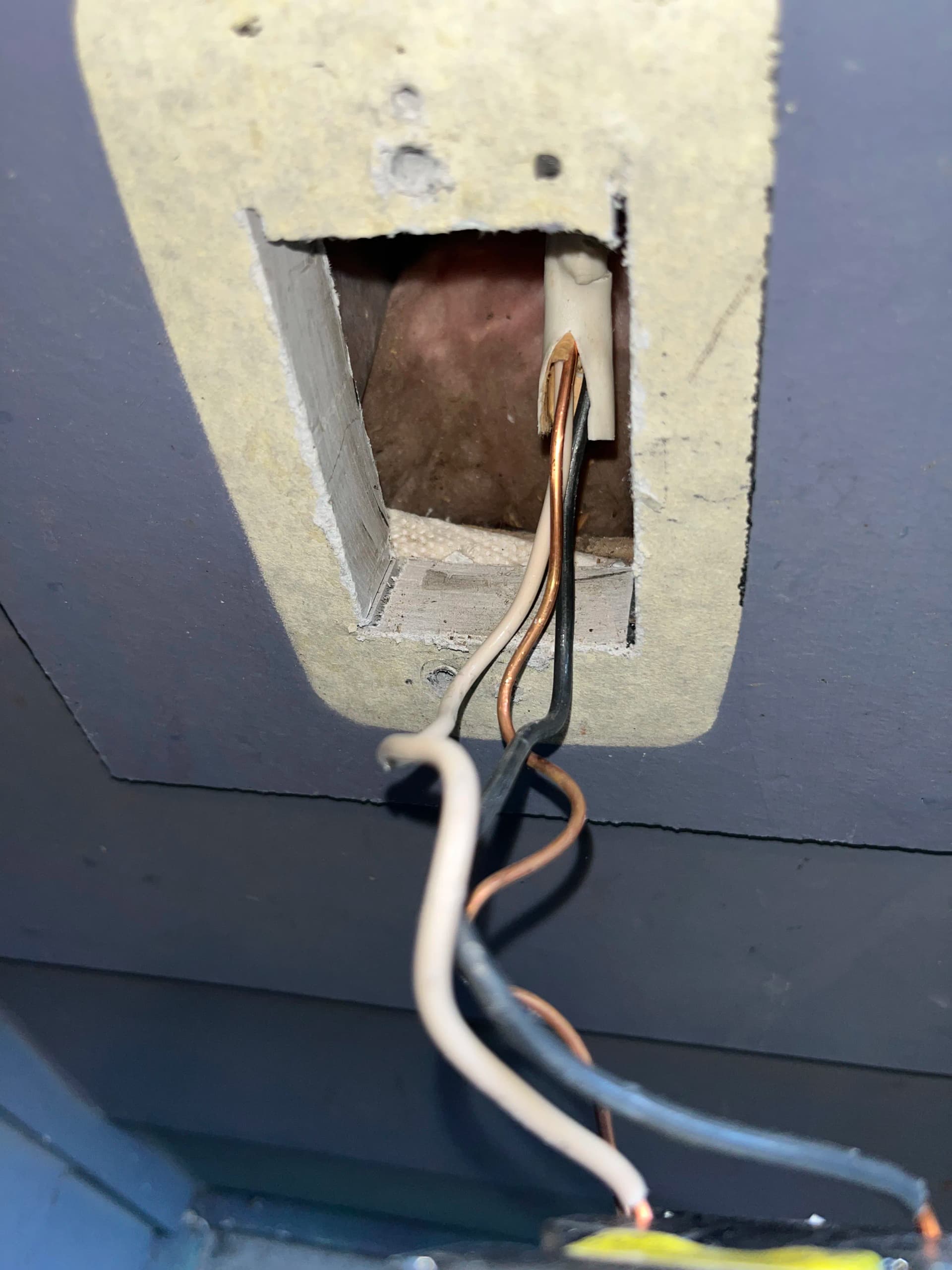
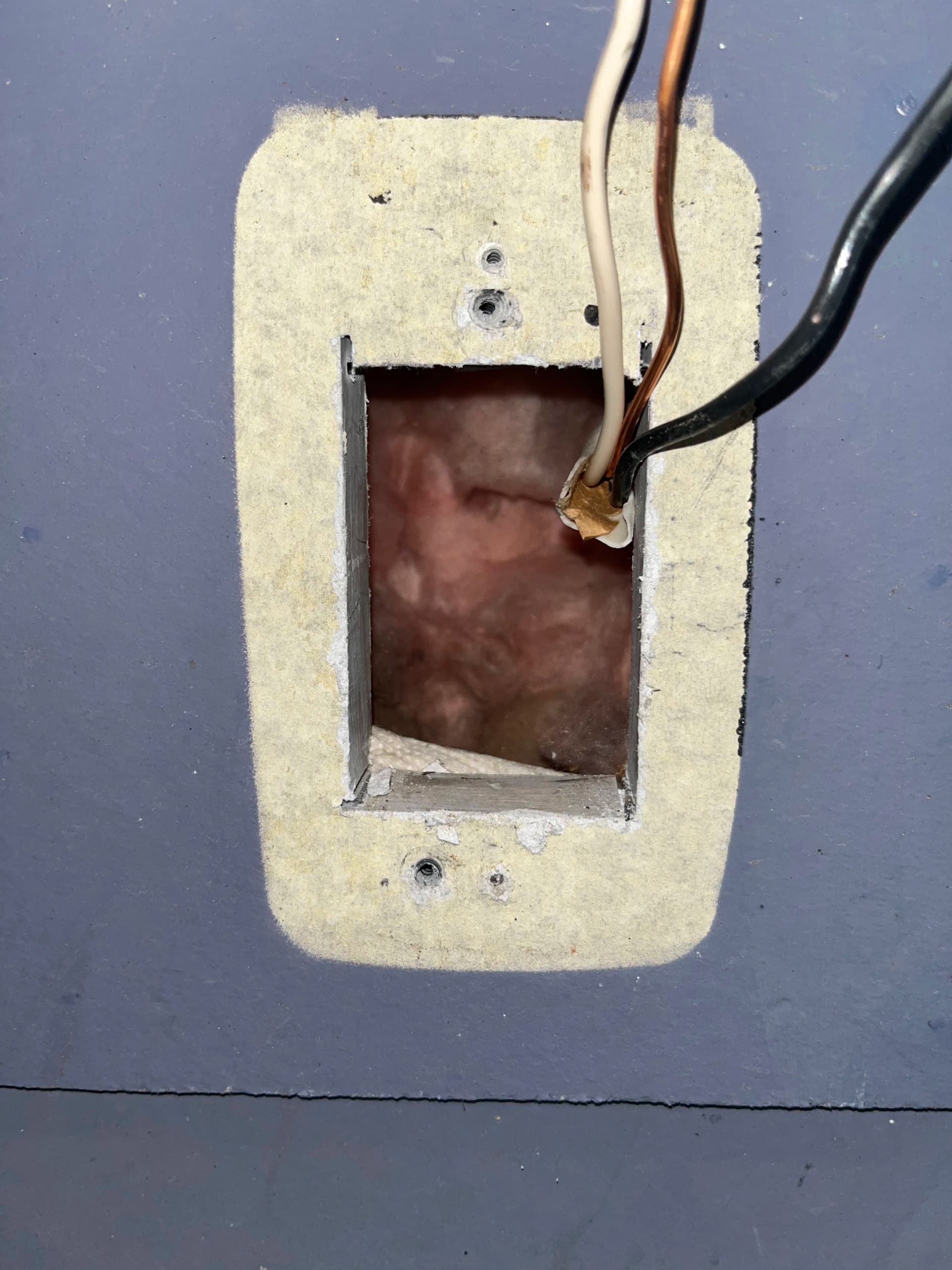
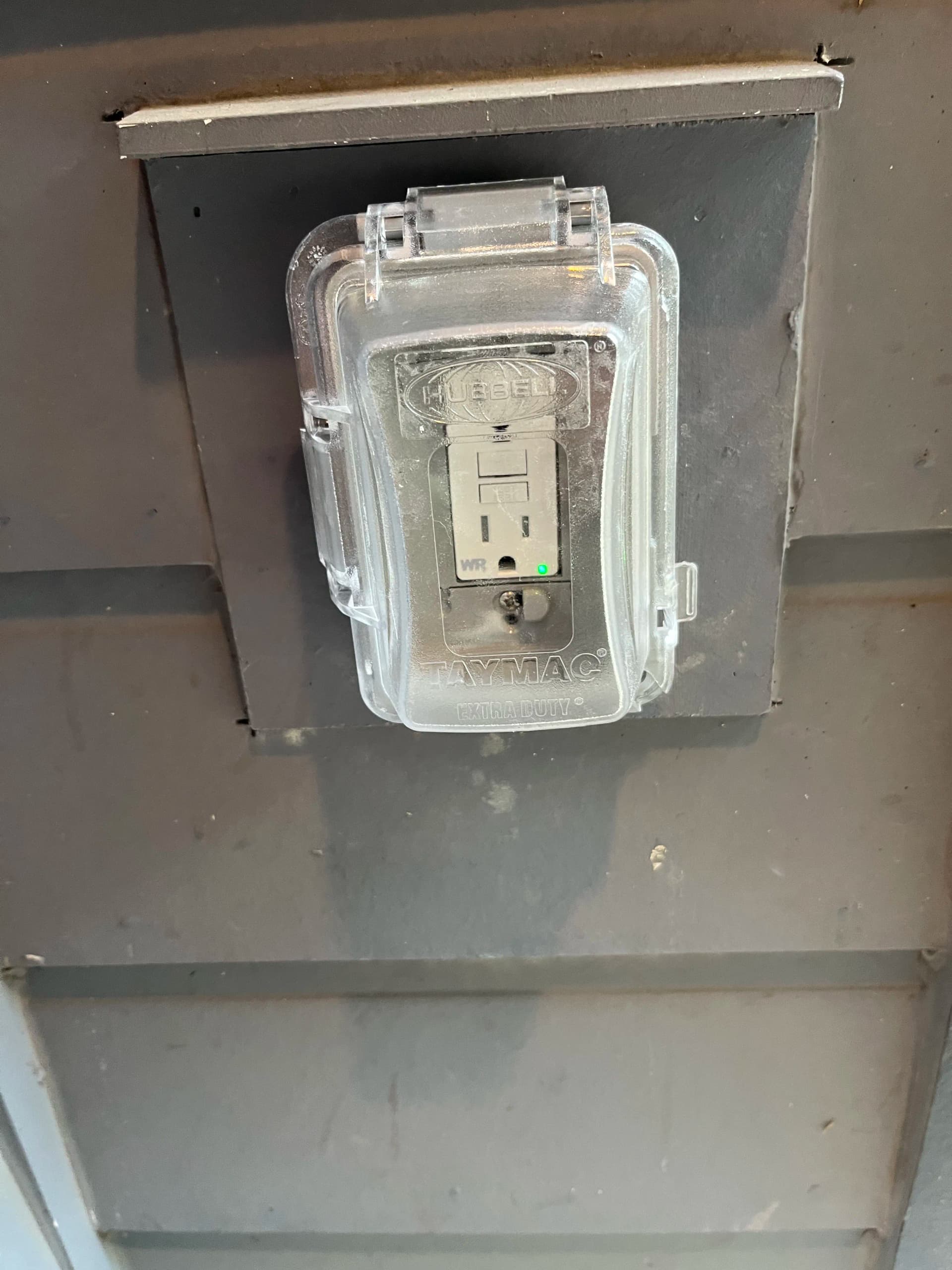
What was supposed to be a simple outlet swap turned into something else entirely. Once we pulled the old receptacle off the wall, there was no electrical box behind it at all. Just wires coming through a rough hole in the siding with nothing supporting them. That's not a minor oversight - that's a real safety problem.
An outlet without a proper box behind it has no grounding path, no structural support, and no protection from the elements. On an exterior wall, that's especially bad. Moisture, insects, and temperature swings can all work their way into an unprotected opening like that. And if something goes wrong electrically, there's nothing there to contain it.
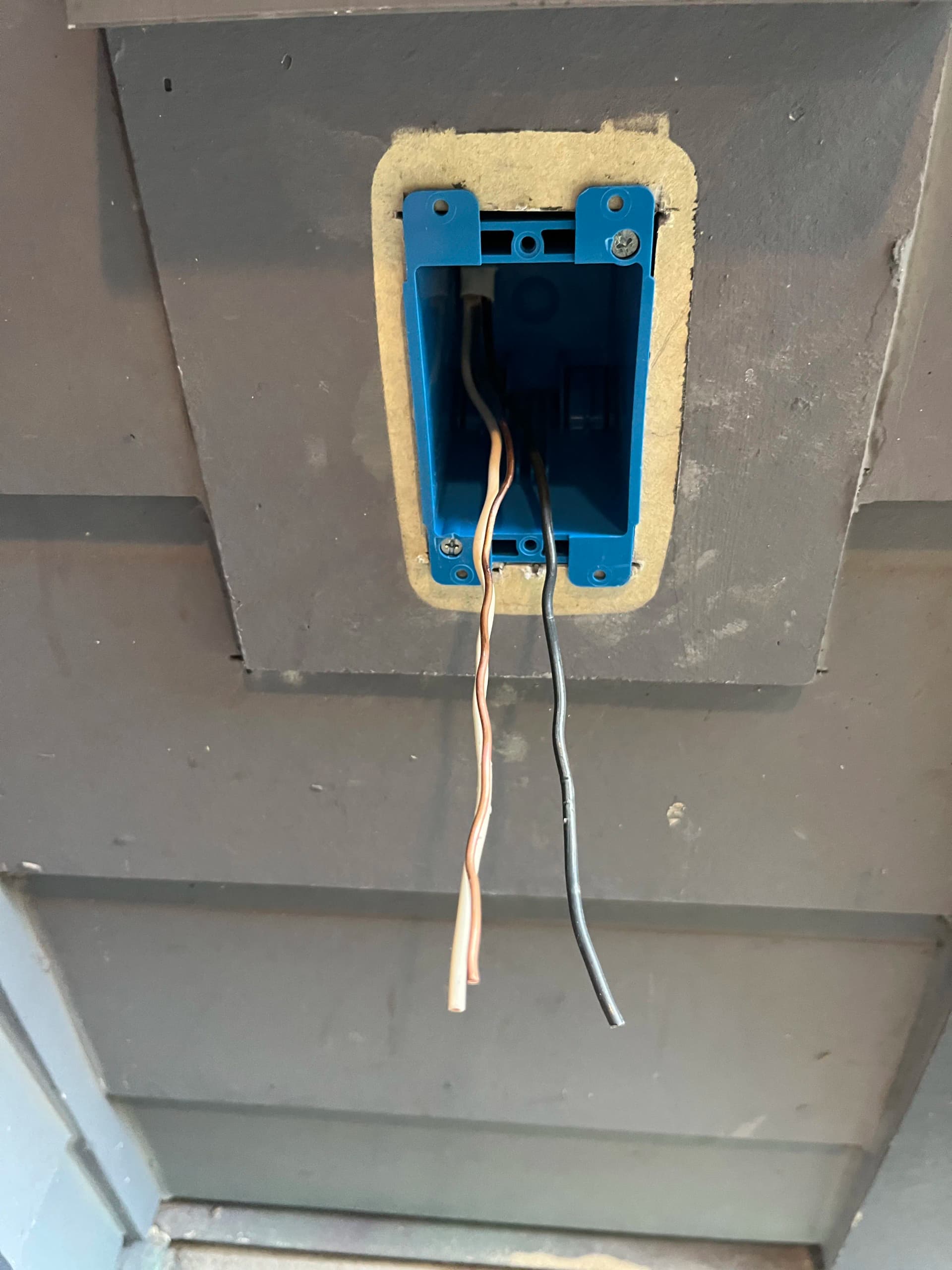
We cut a proper opening in the siding, fitted a new electrical box flush to the wall, and got everything seated correctly before moving forward. From there, we installed a Hubbell weather-resistant GFCI receptacle - the kind rated specifically for outdoor use - and finished it with a TayMac Extra Duty rainproof cover. The green indicator light on the GFCI confirmed everything was wired correctly and protected before we called it done.
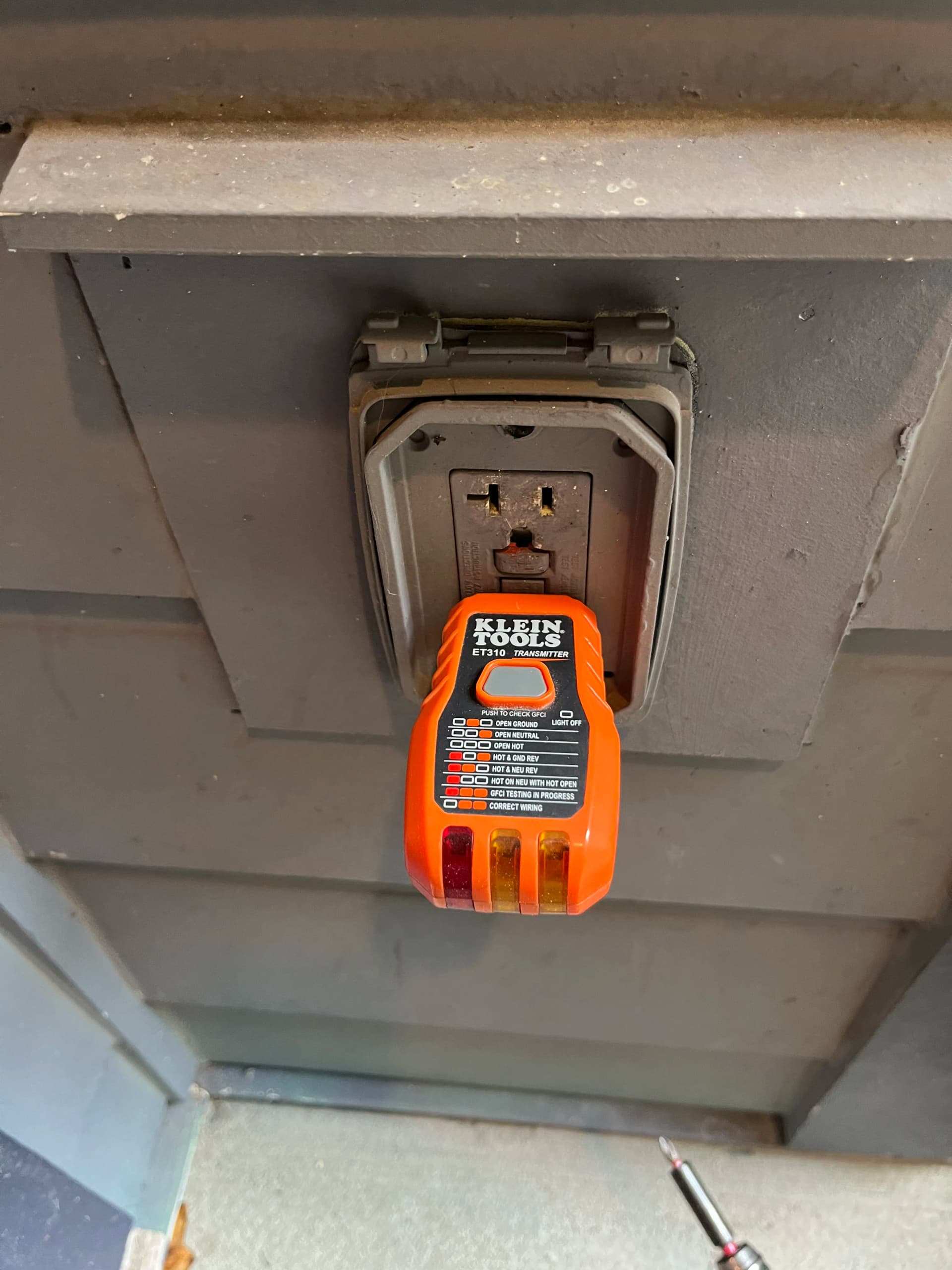
This is exactly why we don't just swap hardware and walk away. Our electrical troubleshooting process means we're checking what's behind the wall, not just what's in front of it. A Klein Tools outlet tester gave us a clear read on the circuit before the new receptacle even went in - hot & neutral confirmed, GFCI functioning, correct wiring verified.
If you have an exterior outlet that trips randomly, looks off, or has never been checked, it's worth having someone take a closer look. What's on the surface doesn't always tell the full story.